
What Is Bihon? A Complete Guide to the Filipino Noodle
By Ngosiok Marketing, makers of Super Q bihon in Cebu since 1945 ·
Bihon is the fine, thin noodle at the heart of pancit — the stir-fried noodle dish served at nearly every Filipino birthday, fiesta and family gathering. The name describes the noodle’s form rather than a single ingredient: bihon is traditionally made from rice, but a large share of the bihon sold in the Philippines today is cornstarch-based, which cooks and tastes noticeably different.
This guide covers what separates the two, how bihon compares to sotanghon and pancit canton, how to judge quality before you buy, and how to keep it from turning soggy in the pan.
Rice bihon vs cornstarch bihon
Both are sold as “bihon,” and both belong in a pancit. The difference shows up in the pan.
Rice bihon is the older form — fine white strands that soften quickly and carry a mild, clean flavour. It is less forgiving of a long cook: left too long in a wet pan, the strands break down.
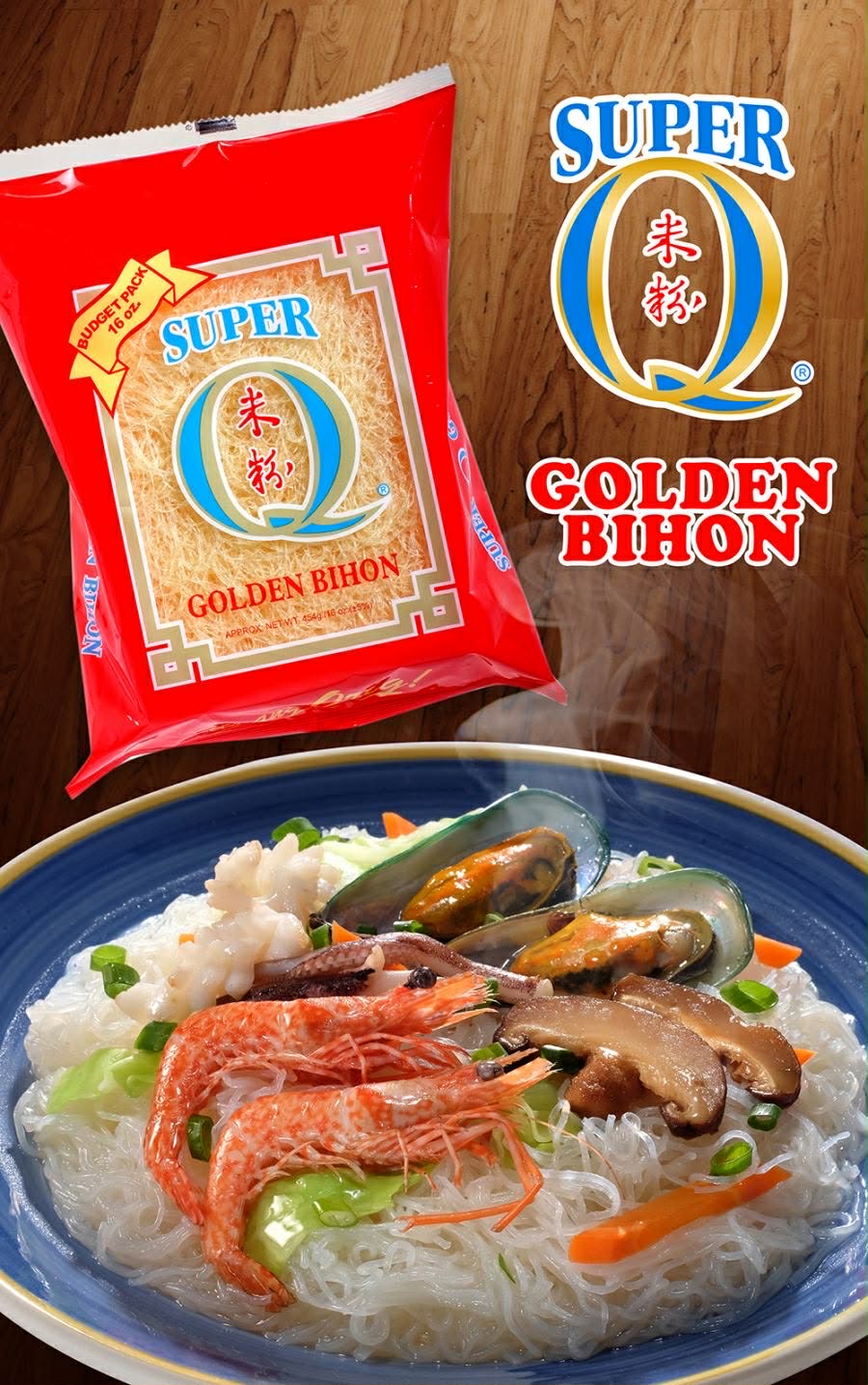
Cornstarch bihon is what Super Q produces. It has a natural yellow colour that comes from the cornstarch rather than from any added colouring, and it is formed into a rectangular, hard and compact block. Cooked, it turns soft, smooth and bouncy while still holding a distinct bite — the quality most cooks are describing when they say a pancit “holds up” on the serving table rather than going limp after twenty minutes.
That compactness is not cosmetic. A denser block means more noodle per pack, which is why yield is one of the more practical things to compare between brands.
How to tell good bihon from bad
Strand consistency
Fine, even strands cook at the same rate. Uneven strands give you a pan where some noodles are still firm and others have already gone soft.
Compactness and yield
A denser, more compact block holds more noodle in the same pack. Super Q Golden Bihon is made rectangular, hard and compact specifically because that compactness allows for considerable yield — the practical test is how many servings a pack actually produces. A 500 g pack of Super Q Golden Bihon feeds at least 5 people.
Colour without colouring
Cornstarch bihon carries a natural yellow colour that comes from the cornstarch itself. A yellow that comes from added colouring is a different thing entirely — worth checking the pack.
How it was dried
Sun-dried noodles are exposed to whatever is in the open air. Super Q is produced through a proprietary process in a controlled environment, which minimises the foreign matter that comes with human handling and open-air drying.
Behaviour in the pan
Good bihon absorbs sauce without disintegrating. It should finish soft, smooth and bouncy while still holding a distinct bite — not collapse into paste.
Bihon vs sotanghon vs pancit canton
These three get used interchangeably in conversation and are not interchangeable in a pan. Here is how they differ.
| Noodle | Base | Strand | When cooked | Typical dish |
|---|---|---|---|---|
| Bihon | Cornstarch (Super Q) or rice | Very fine, thin | Soft and smooth, keeps a distinct bite | Pancit bihon guisado |
| Palabok | Cornstarch | Noticeably thicker than bihon | Fuller, needs longer cooking | Pancit palabok |
| Sotanghon | Vermicelli-style glass noodle | Fine, turns translucent | Smooth and slippery, neutral flavour | Chicken sotanghon soup, lumpia filling |
| Pancit canton | Wheat | Thick, puffed by deep frying | Firm and chewy | Pancit canton guisado |
| Misua | Wheat flour | Very fine, circular shape | Delicate, softens quickly | Misua soup, birthday noodles |
Cook bihon and pancit canton together in one pan and you have pancit bam-i, a Visayan staple.
How to cook bihon without it going soggy
Nearly every soggy pancit comes down to the same two mistakes: the noodles were soaked too long, or they went into the pan too early.
- 1Check whether it needs soaking at all. Super Q Golden Bihon does not. It goes into boiling soup stock straight from the pack, 1 liter for every 250 g, and boils for 4 minutes before you loosen it. If another brand’s pack says to soak, keep it short: pliable, not soft.
- 2Build the sauce first. Cook the meat and vegetables and season the broth before the noodles are anywhere near the pan. Bihon absorbs whatever it sits in, so the liquid should already taste right.
- 3Add the noodles last. Fold them through and let them take up the liquid. Toss with tongs rather than stirring hard — aggressive stirring is what shreds the strands.
- 4Stop while it still has bite. Residual heat keeps working after the pan comes off. Pull it slightly early, especially if it is going onto a buffet table.
Want the full method with quantities? Follow our pancit bihon guisado recipe, or browse all our noodle recipes.
Frequently asked questions
What is bihon made of?
It depends on the maker. Bihon is traditionally a rice noodle, but a large share of the bihon sold in the Philippines today is cornstarch-based. Super Q Golden Bihon is cornstarch-based, which is where its natural yellow colour comes from — no colouring is needed to produce it.
Is bihon the same as rice noodles?
Not always. "Bihon" describes the noodle's form — very fine, thin strands used for pancit — rather than one fixed ingredient. Rice bihon and cornstarch bihon are both sold under the name, and they cook and taste noticeably different.
What is the difference between bihon and sotanghon?
Bihon strands are fine and opaque, and they carry a light colour once cooked. Sotanghon is a vermicelli-style glass noodle that turns translucent and slippery when cooked, with a neutral flavour that takes on whatever it is cooked with. Sotanghon is the usual choice for chicken soup and spring roll fillings; bihon is the backbone of pancit guisado.
What is the difference between bihon and pancit canton?
Pancit canton is a wheat-based noodle that is puffed up by deep frying the cooked noodles before packing, giving it a much thicker strand and a firmer, chewier bite. Bihon is finer and lighter. Many Filipino households cook both together in one pan — the dish is known as pancit bam-i.
Why does my pancit bihon turn mushy?
Usually over-soaking, or adding the noodles too early. Bihon continues to absorb liquid the entire time it sits in the pan, so it should go in near the end, once the sauce is seasoned and the meat and vegetables are already cooked. Noodle quality matters too: strands that were dried unevenly break down faster in the pan.
Do you need to soak bihon before cooking?
It depends on the bihon. Super Q Golden Bihon needs no soaking: bring 1 liter of soup stock to the boil for every 250 g of bihon, add the bihon straight from the pack, and let it boil for 4 minutes before you start loosening it. Other bihon, especially rice bihon, may need a short soak, so follow the instructions on its pack.
The bihon we make
Ngosiok Marketing has been making noodles in Cebu since 1945. Super Q Golden Bihon is our cornstarch-based premium bihon, produced in a controlled environment and sold locally and internationally. Comparing brands? See how to choose the best bihon, including how to weigh a pack yourself.